
Outpatient Chemotherapy Center
June 16,2026 Update
Introduction
Treatment with anti-cancer drugs is one of the three major treatments for cancer, along with surgery and radiation. In recent years, the development of new anti-cancer drugs, the combination of effective anti-cancer drugs and the advancement of support therapy to reduce side effects has made it possible for patients to undergo anti-cancer treatment as an outpatient while still maintaining their conventional lives.
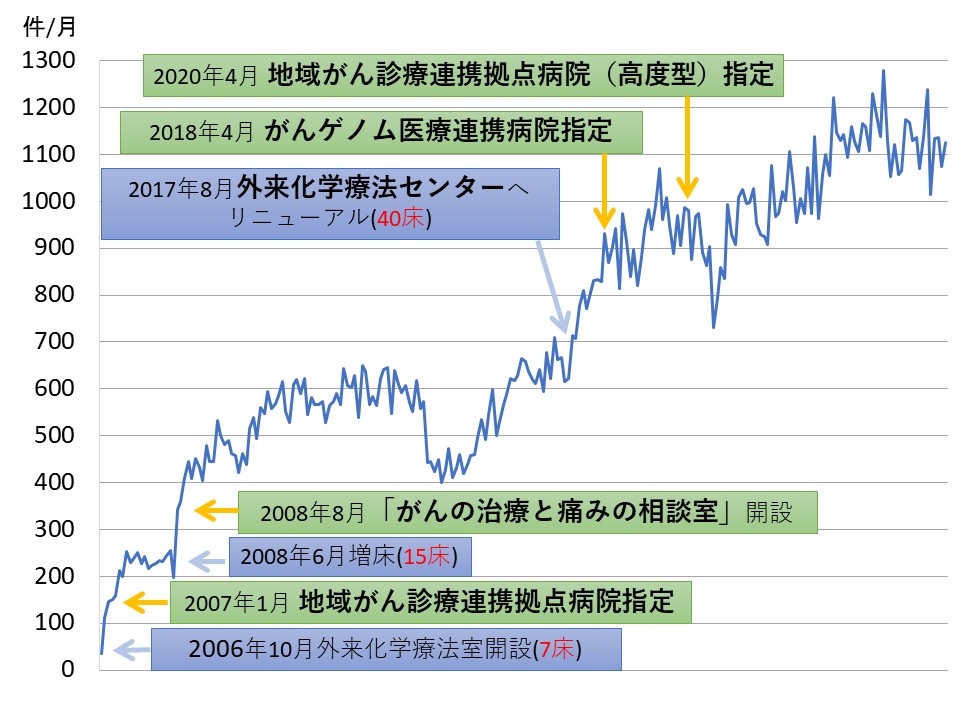
In October 2006, an outpatient chemotherapy room was established at the Saitama Medical Center, aiming to provide high-quality anti-cancer drug treatment. In January 2007, it was designated as a Regional Cancer Treatment Cooperative Base Hospital and is working to provide standard cancer therapy and to strengthen medical cooperation with the local community. In June 2008, the number of beds increased from 7 to 15. In August 2017, it was opened as the Outpatient Chemotherapy Center after renewal with the number of beds expanded to 40 and was enhanced with respect to the functionality.
All of the Outpatient Chemotherapy Center staff, the doctors, nurses, and pharmacists are working together to make use of their expertise to provide safe medical care.
Outpatient Chemotherapy Center overview
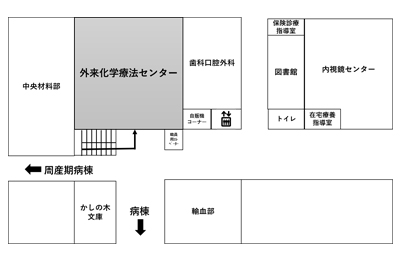
| Location | Main building 3rd floor |
|---|---|
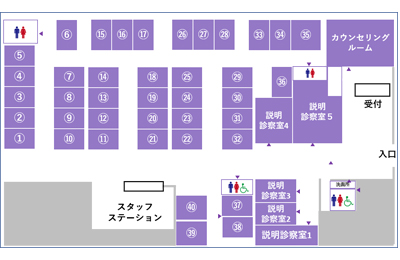
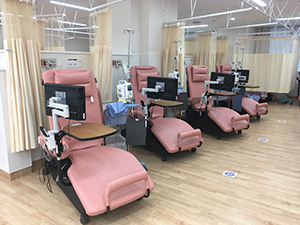
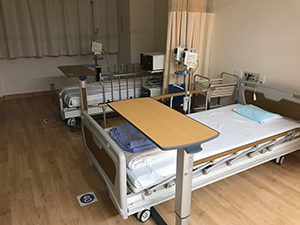
| Main equipment | Reclining chairs: 38 beds (including 2 in a dark room) *All with TVs Beds: 2 beds Consultation rooms: 5 rooms Other, wheelchair-accessible toilet, Ostomate available toilet |
| Times | Monday to Saturday (except Sundays, national holidays and Year-end and New Year holidays) 8:30 to 17:30 |
Staff introduction
One full-time physician, and doctors in charge of other departments
Nurses: 23 people
Pharmacists: 9 people
Management registered dietitian: 1 people
| Doctor | Nobuyuki Koyama | Department of Respiratory Medicine in Associate Chief,Professor Fellow of the Japanese Society of Internal Medicine (FJSIM) Board Certified Member of the Japanese Respiratory Society Senior Fellow of the Japanese Respiratory Society Board-Certified Bronchoscopist, The Japan Society for Respiratory Endoscopy (JSRE) Bronchoscopy Instructor, The Japan Society for Respiratory Endoscopy (JSRE) Diplomate, Subspecialty Board of Medical Oncology, JSMO General Clinical Oncologist(by JBCT) |
| Nurse | Kaori Ichijo | Head Nurse |
| Nurse | Yuko Nakamura | Chief |
| Nurse | Hiromi Shimada | Certified Nurse in Cancer Chemotherapy Nursing |
| Pharmacist | Hiroyuki Ooya | Chief JASPO Board-certified Pharmacist of Ambulatory Cancer Chemotherapy(BPACC) Board Certified Pharmacist in Palliative Pharmacy(BCPPP) Board Certified Provisional Guidance Pharmacist in Palliative Pharmacy |
| Pharmacist | Mashu Morimoto | Chief JASPO Accredited Pharmacist of Ambulatory Cancer Chemotherapy(APACC) JSPEN Certificated Pharmacist in Nutritional Support |
| Pharmacist | Yoshimi Shimada | Chief JASPO Accredited Pharmacist of Ambulatory Cancer Chemotherapy(APACC) JSCN Supplement Adviser |
| Management registered dietitian |
Wakako Yokota | Chief JSMCN Certified Specialist of Registered Dietitian for Cancers(CSRDC) JSPEN Certificated Dietitian in Nutritional Support |
Flow of a consultation
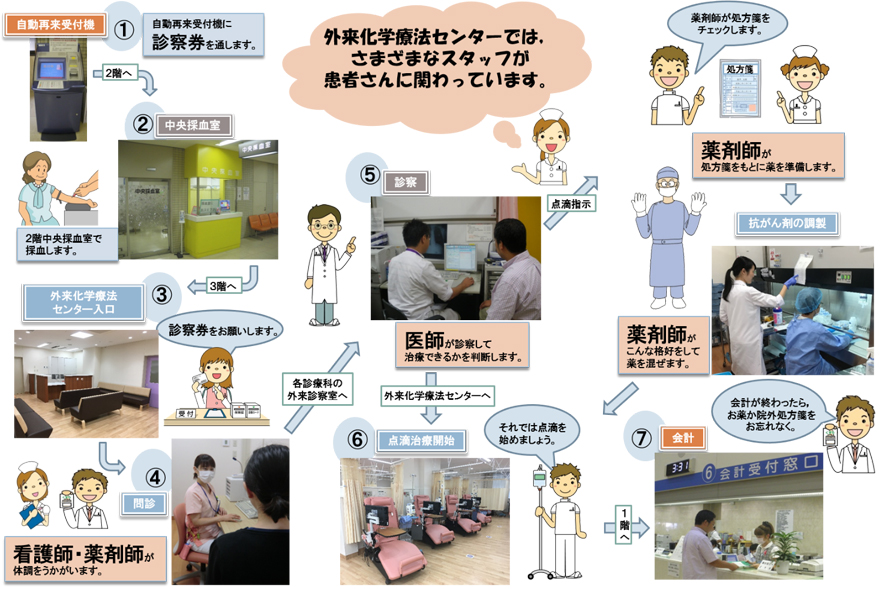
The flow from reception to the examination and the treatment at the Outpatient Chemotherapy Center and accounting is as shown below. All the staff are involved with the patient, from coming in to the clinic to going home.
Medical Service Content
Outpatient Chemotherapy Center features
- We can also treat them with biological preparations for rheumatoid arthritis and inflammatory bowel diseases in addition to treatment with anticancer drugs.
- Various types of cancers can be treated with anti-cancer drugs, and they are treated with not only cytotoxic anti-cancer drugs and molecular target therapeutics, but also with immune checkpoint inhibitors.
- We practice team medical care with doctors, nurses, pharmacists and other medical practitioners, from the time the patient comes in until they go home.
There are 14 medical departments that utilize the Outpatient Chemotherapy Center, and 574 types of registered treatments (regimens) (Table 1). All of them are standard treatment methods that have been registered after specialists from multiple medical departments evaluated the validity of the treatment.
The target diseases include colon cancer, gastric cancer, lung cancer, breast cancer, pancreatic cancer, ovarian cancer, uterine body cancer, cervical cancer, malignant lymphoma, and multiple myeloma. The details for the results of the medical treatment are listed (Table 2).
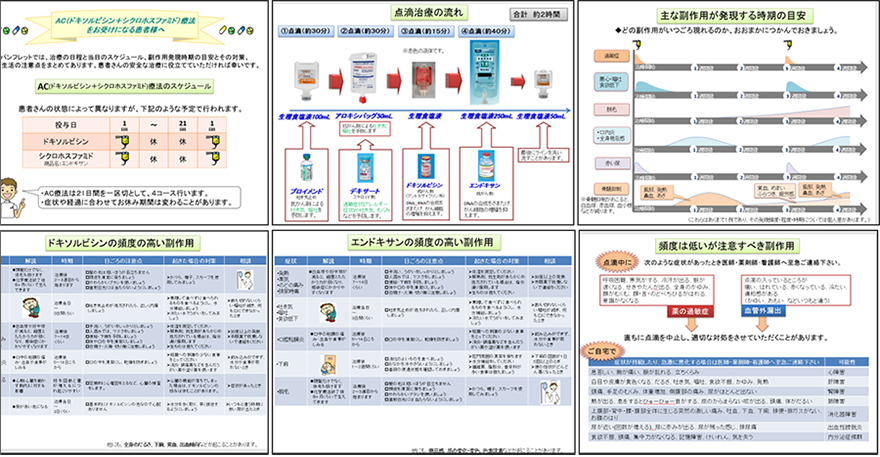
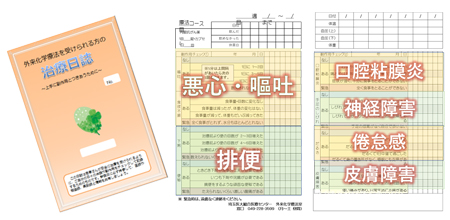
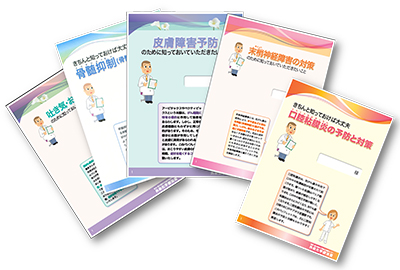
We have prepared a patient brochure with the most commonly used regimens (Figure 1). This brochure contains the schedule of treatments, the type of infusions on the day of treatment, the order of administration, the time required, the type and timing of the major side effects, home care and life advice, and emergency contact information. We also create a patient journal (Figure 2) and a pamphlet for each side effect (Figure 3) to help patients understand the treatment and the side effects, and to continue the safe treatment at their hospital visits. In August 2008, we opened a consultation desk called the "Cancer Treatment and Pain Counseling Room" in order to respond to the discomfort of the physical symptoms and feelings such as the pain caused by cancer, the anxiety associated with treatment, and the worries about life and care at home. Here, we work with the palliative care team to provide consultation for the patients and their families.
| Department of Gastroenterology and Hepatology | 42 |
| Department of Digestive Tract and General Surgery | 84 |
| Department of Hepato-Biliary-Pancreatic and Pediatric Surgery | 24 |
| Department of Pulmonary Medicine | 75 |
| Department of General Thoracic Surgery | 62 |
| Department of Hematology | 77 |
| Department of Obstetrics and Gynecology | 57 |
| Department of Breast Care | 65 |
| Department of Urology | 42 |
| Department of Neurosurgery | 7 |
| Department of Dermatology | 18 |
| Department of Rheumatology and Clinical Immunology | 15 |
| Department of Pediatrics | 4 |
| Department of Neurology | 2 |
| Total (As of May 2026) | 574 |
Treatment results
(2) Table 2.2025 results
| Malignant tumors | Cases |
|---|---|
| Breast cancer | 2,134 |
| Colon cancer | 1,764 |
| Lung cancer | 1,431 |
| Pancreatic cancer | 1,027 |
| Multiple myeloma | 849 |
| Malignant lymphoma | 567 |
| Urothelial cancer | 478 |
| Stomach cancer | 435 |
| Ovarian cancer | 399 |
| Biliary tract cancer | 337 |
| Cervical cancer | 258 |
| Hepatocellular carcinoma | 246 |
| Prostate cancer | 193 |
| Renal cell cancer | 185 |
| Acute myeloid leukemia | 167 |
| Malignant melanoma | 165 |
| Uterine body cancer | 161 |
| Malignant glioma | 126 |
| Esophageal cancer | 124 |
| Myelodysplastic syndromes | 35 |
| TMB-High cancer | 21 |
| MSI-High cancer | 13 |
| Other | 274 |
| Other than malignant tumors | Cases |
|---|---|
| Articular rheumatism | 904 |
| Adult-onset still’s disease | 225 |
| Crohn’s disease | 214 |
| Systemic lups erythematosus | 207 |
| Castleman disease(including TAFRO syndrome) | 188 |
| Ulcerative colitis | 88 |
| Granulomatosis with polyangiitis/microscopic polyangiitis | 77 |
| Bechet’s disease | 68 |
| Systemic scleroderma | 58 |
| Psoriasis | 45 |
| Systemic-onset juvenile idiopathic arthritis | 10 |
| Idiopathic thrombocytopenic purpura/Thrombotic thrombocytopenic purpura | 8 |
| Ankylosing spondylitis | 5 |
| Other | 55 |
To the Medical Institutions
All of our staff are working hard daily to provide safe and high quality medical care for our patients. If you have any questions, please contact the doctor in charge of each department or the Outpatient Chemotherapy Center staff.
To patients
When the hospital receives a document from the patient and the employers of the patient containing work information, the hospital can take the following actions.
- Provide information necessary for balancing work and medical treatment.
- Guidance needed for therapy in response to changes in the work environment after information is provided.
If you have any questions, please contact the doctor in charge of each department or the Outpatient Chemotherapy Center staff.
Tel. 049-228-3599 (Outpatient Chemotherapy Center reception)
Monday to Saturday (except Sundays, national holidays and Year-end and New Year holidays)
From 8:30 to 17:30